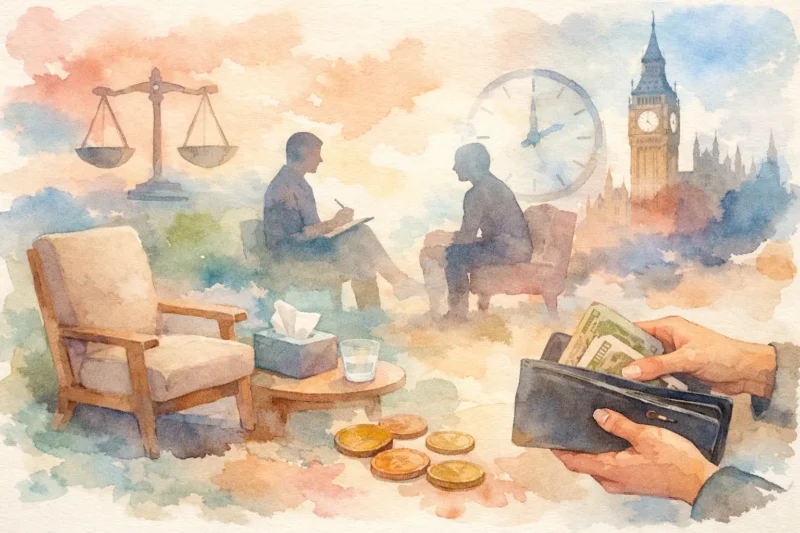
If you are searching for how much a private therapist costs in the UK, the short answer is that most private therapy sessions fall somewhere between £50 and £150, with some practitioners charging less and others considerably more. In London, especially Central London, fees often sit at the higher end of that range. Online sessions can sometimes be slightly lower, but not always.
That broad range can feel frustrating when you want a clear figure. The reality is that therapy fees vary for sensible reasons: the therapist’s experience, their qualifications, where they work, the type of therapy offered and whether you are booking as an individual, couple or family. The useful question is not only what therapy costs, but what you are paying for and how to find the right support without wasting time.
Across the UK, individual therapy commonly costs around £50 to £90 per session outside major cities, and around £80 to £150 in London. Some newly established therapists may charge less, while highly experienced practitioners with specialist training may charge £160 or more.
A standard session is usually 50 minutes, although some therapists offer full hour appointments. Couples therapy is often more expensive than individual counselling because sessions are longer and the work can be more complex. It is common to see couples sessions priced from around £90 to £180, with some specialist relationship therapists charging above that. Family therapy can be higher again, depending on how many people attend and how long the session runs.
If you are considering coaching or hypnotherapy alongside counselling or psychotherapy, prices can differ as well. Some coaches charge in line with therapists, while others price by programme rather than by session.
Price differences are not random. In most cases, they reflect a mix of practical and professional factors.
Therapy in London generally costs more than therapy in other parts of the UK. That is partly due to higher room rental costs, travel costs and general business overheads. A therapist seeing clients face-to-face in Central London will usually have greater expenses than someone working online from home in another region.
That said, higher cost does not automatically mean better therapy. It may simply reflect where the therapist is based. If flexibility matters more than location, online therapy can widen your options and sometimes make fees more manageable.
Therapists with many years of clinical experience, additional specialist training or a strong reputation in a particular area often charge more. You may also find higher fees where a practitioner works with complex trauma, addiction, eating disorders or high-pressure professional burnout.
Professional registration matters too. Many clients look for therapists registered with bodies such as BACP or UKCP because it adds reassurance around standards, ethics and ongoing professional development. You are not only paying for the session itself, but for the therapist’s training, supervision, insurance and clinical responsibility.
Not every therapy approach is priced in the same way. Cognitive Behavioural Therapy, psychodynamic therapy, integrative counselling, EMDR and specialist trauma work can all sit at different price points depending on training level and demand.
Longer or more structured appointments can cost more. For example, EMDR sessions may sometimes run longer than standard counselling sessions, and couples work often requires a different format from one-to-one therapy.
Face-to-face therapy is not always more expensive than online, but it often is. In-person work involves room hire and travel, while online appointments can offer more flexibility for both therapist and client. Telephone therapy is sometimes priced similarly to online sessions.
For busy professionals, the best option is often the one you can attend consistently. A slightly higher fee for a convenient weekly appointment may be better value than a cheaper session you keep postponing.
When people ask how much does a private therapist cost UK, they are usually thinking about the session fee alone. It is also worth checking the wider practical details.
Most therapists include the clinical session, basic administration and routine communication in their fee. Some also offer a short initial call at no charge, while others charge for an assessment session from the start. Cancellation policies vary, and many practitioners charge the full fee if you cancel with less than 24 or 48 hours’ notice.
If you are using private health insurance, check whether your therapist is recognised by your insurer and whether there are limits on session numbers or referral requirements. Even when insurance contributes, there may still be an excess to pay.
Private therapy is a significant commitment, especially if you expect to attend weekly. If standard fees feel out of reach, there are still options worth considering.
Some therapists offer reduced-fee or sliding-scale spaces for clients on lower incomes, although availability is usually limited. Therapists in training may charge less while working under close supervision. Charities and community organisations can sometimes provide affordable counselling, often with longer waiting lists. Employee assistance programmes may offer short-term therapy through work, and some universities provide low-cost services through training clinics.
These options can be genuinely helpful, but there are trade-offs. Lower cost may mean less flexibility on appointment times, fewer specialist choices or a waiting period before therapy starts. If you need prompt support, private therapy often remains the fastest route.
The cheapest therapist is not always the most affordable in the long run, and the most expensive is not always the best fit. Good therapy depends on the relationship, the therapist’s skill with your particular issue and whether the arrangement works in real life.
Ask practical questions early. What experience does the therapist have with your concern? How often do they recommend sessions? Do they work short term, open ended or both? Are appointments available at times you can actually keep? A clear and professional response is usually a good sign.
It also helps to think about therapy as an ongoing cost rather than a one-off purchase. A session fee of £70 might sound manageable until you multiply it across several months. Equally, paying £95 for a therapist who feels right and is available promptly may be better value than starting cheaply, stopping, and having to begin again elsewhere.
Couples and family work usually costs more than individual therapy because the sessions are often longer and require a different level of management in the room. For couples counselling in the UK, a realistic guide is around £90 to £180 per session, with London rates often at the upper end. Family therapy can range even more widely depending on session length and the number of people attending.
If you are booking as a couple, ask whether the quoted fee covers a 50-minute session or a longer appointment. Some practitioners work for 60, 75 or 90 minutes, which can make a higher headline cost more understandable.
One of the hardest parts of starting therapy is not always the cost. It is working out who is suitable, available and experienced with the issue you are facing. That can be difficult when every profile sounds similar and you are already under strain.
A curated referral service can save time here. Rather than contacting multiple therapists yourself, you can be matched with practitioners who fit your needs, budget and preferred format, whether that is face-to-face in London or online elsewhere in the UK. For many clients, that quick, human response makes the process feel much more manageable.
At City of London Therapy Centre, for example, the focus is on helping people find the right support efficiently through a trusted network of independent therapists, counsellors and coaches. That means you can ask about fees, availability and therapy types early, instead of trying to piece everything together alone.
If you are unsure what you can afford, start by deciding what is sustainable for at least six to eight sessions. Weekly therapy is common at the beginning, though some people move to fortnightly sessions later. Think about your ideal budget, your upper limit and whether online therapy would widen your options.
It is perfectly reasonable to be upfront about cost. A professional therapist will understand that budget matters and should be able to explain their fee clearly. Therapy works best when the practical arrangement feels stable, not financially stressful from week one.
The right support is not always the lowest-priced option. It is the one that feels safe, professionally grounded and realistic for your life, so you can begin the work without another layer of uncertainty.